
Article: Gymnastics Leotards That Do Not Pinch: A Fit Guide
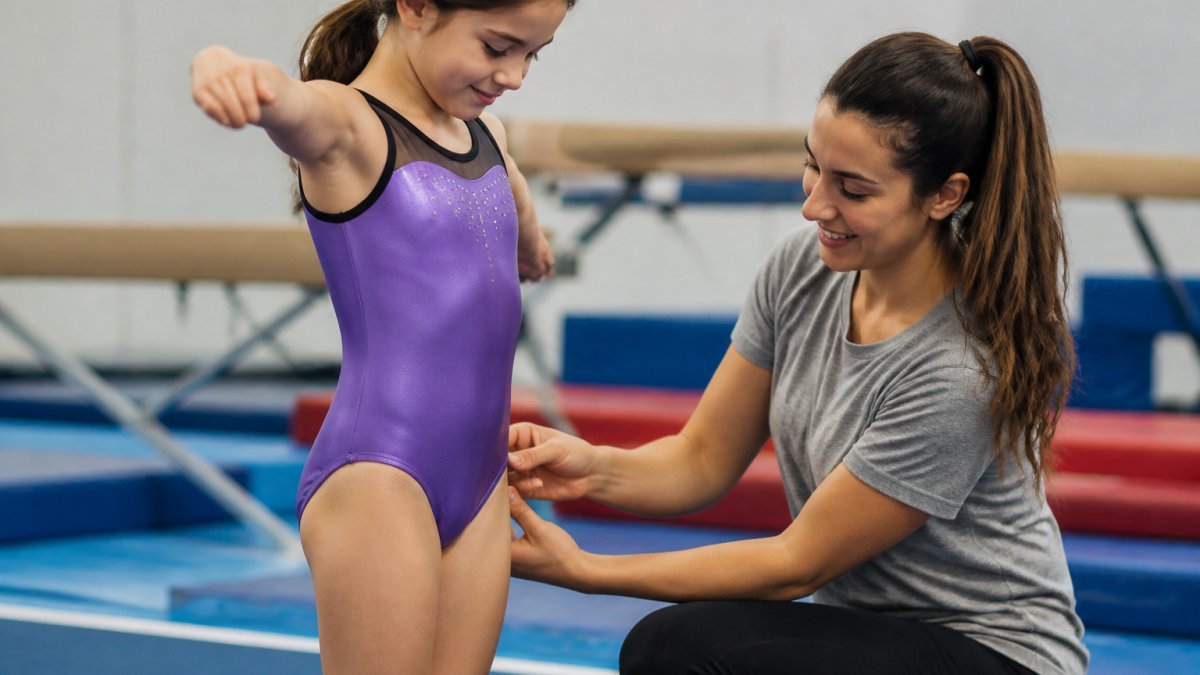
Gymnastics Leotards That Do Not Pinch: A Fit Guide
Table of Contents
- Why Gymnastics Leotards Pinch and How to Spot the Problem
- How Should a Gymnastics Leotard Fit
- Gymnastics Leotard Size Chart and Torso Length
- Prevent Chafing in Gymnastics Leotards
- Best Gymnastics Leotards for Practice
- Fit Tests and Adjustments for Growing Athletes
- Frequently Asked Questions
Last Updated: October 19, 2026
Why Gymnastics Leotards Pinch and How to Spot the Problem
Pinching is one of the most common complaints we hear from athletes and coaches. It breaks concentration and can cause skin irritation that sidelines gymnasts. But pinching isn't always about the leotard being too small, it's about fit in specific areas, and knowing where pinching happens is the first step to preventing it.
At Foxy's, we've been crafting leotards since 1985, helping gymnasts find gymnastics leotards that do not pinch. The problem usually comes down to three factors: incorrect sizing for your torso length, the wrong cut for your body shape, or fabric that lacks adequate stretch.
Common Pinch Points and What Causes Them
Pinching typically happens in four specific areas: the leg openings, the shoulder seams, the torso (where the leotard meets your hips), and along the side seams. Each pinch point has a different cause, which means each one has a different fix.
Leg opening pinching occurs when the opening is cut too narrow for your thigh or the elastic is too tight.
Understanding which area pinches tells you what to adjust: a different cut or size up for leg openings, a wider armhole for shoulders, and a measured torso length matched to the size chart for torso pinching.
The Pinch-Point Diagnosis Checklist
Use this checklist to identify exactly where and why your leotard is pinching. Put on the leotard and perform the movements listed. Note which areas feel tight or uncomfortable.
- Leg opening test: Do a deep squat or lunge. Do the leg openings dig into your thighs or groin? Mark this spot.
- Shoulder test: Raise your arms overhead and reach backward. Do the straps or armholes pull or dig into your shoulders? Mark this spot.
- Torso test: Bend forward at the hips to touch your toes. Does the leotard pull up at the shoulders or down at the legs? Does it bunch or twist? Mark this spot.
- Side seam test: Reach your arm across your body to touch your opposite shoulder. Do the side seams dig in or feel restrictive? Mark this spot.
- Waistband test: Does the waistband or hip area feel snug or pinched when you sit or fold? Mark this spot.
How Should a Gymnastics Leotard Fit
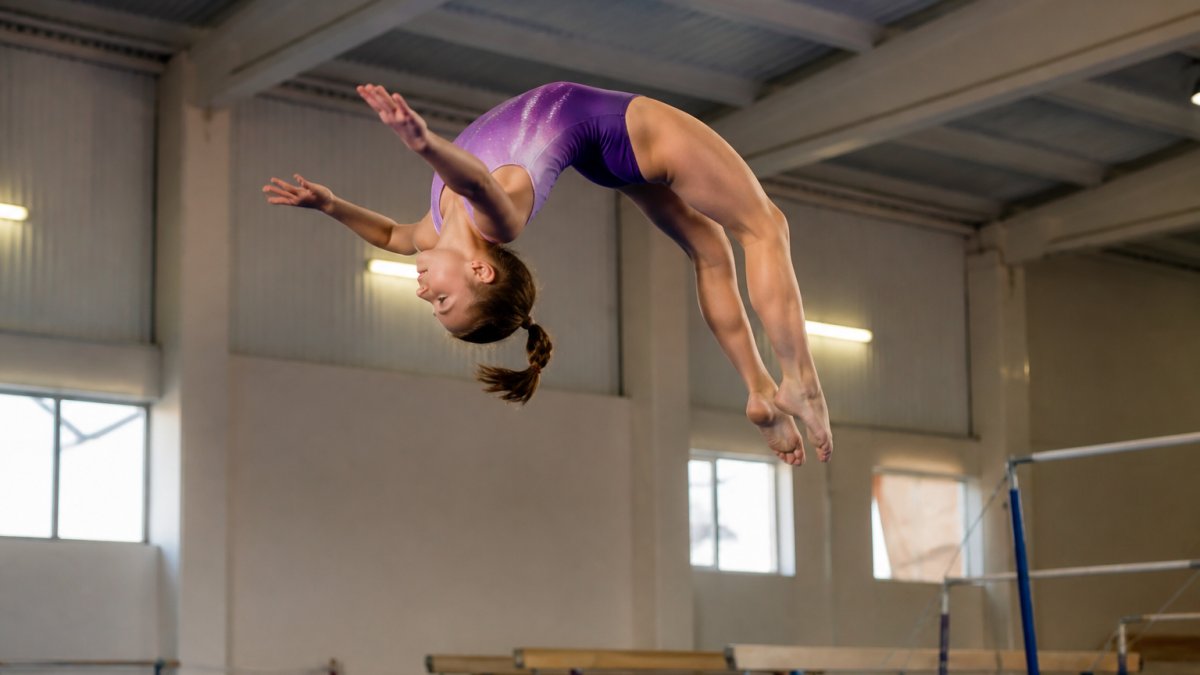
A gymnastics leotard should fit snugly but not tightly. Snug means the fabric follows your body without bunching, gaping, or shifting; tight means it restricts movement, digs into your skin, or pulls uncomfortably. The goal is a secure fit that stays in place through flips, rolls, and tumbling without pinching.
Shoulder and Torso Fit
The shoulder area is where fit quality shows most clearly. Your straps should sit flat without digging in or sliding off, and move with your body when you raise your arms overhead, not pull or twist. The armhole should be wide enough to move your arms freely in all directions without restriction.
Your torso is where most pinching problems start. The leotard should cover your torso without gaps at the shoulders or bunching at the hips, which depends entirely on your actual torso length, measured from the base of your neck to your hip bone.
Leg Opening Fit and Coverage
Leg openings should sit at the top of your thigh without gaping or cutting into your skin, staying in place during cartwheels, handstands, and splits without riding up or pinching. You should be able to fit a finger between the elastic and your skin without forcing it.
Coverage matters too: the leotard should cover your hips and sit securely at your waist without bunching or twisting. Too-wide leg openings shift and gap; too-narrow ones pinch and restrict.
Testing Movement in Key Gymnastics Positions
The real test of fit happens in motion. Before committing to a leotard, test it in the positions you use most.
Overhead reach: Stand with your arms raised overhead and reach backward slightly.
Forward fold: Bend forward at the hips and touch your toes.
Backbend: Lie on your back and arch your back gently.
Split: Do a front split. The leg openings should not pinch or ride up.
Cartwheel or handstand: Perform a cartwheel or hold a handstand. The leotard should not shift, bunch, or create uncomfortable pressure.
If any position creates pinching, note which one triggers it and refer back to the diagnosis checklist.
Gymnastics Leotard Size Chart and Torso Length
Torso length is the single most important measurement for preventing pinching. Most gymnasts don't know theirs, so they order by age or general size and end up with a leotard that fits everywhere except where it matters most.
Why Torso Length Matters More Than You Think
Your torso length determines where the leotard sits. Ordering by height or age can leave you an inch too long or too short, and an inch is the difference between a perfect fit and constant pinching.
Too long, and excess fabric bunches at your hips; too short, and the leotard pulls upward, creating tension across your shoulders and chest. Neither is fixable by sizing up or down, you need the correct torso length.
Measuring your torso is simple. Stand straight and measure from the base of your neck (where your neck meets your shoulders) down to your hip bone.
When to Size Up Versus Choose a Different Cut
Sometimes sizing up is right: if leg openings pinch or the ribcage feels restrictive, a size up gives you room. But sizing up also means a longer torso, which can create bunching instead of pinching.
The better approach is often a different cut, higher leg openings, wider armholes, or racerback and T-back designs that sit differently on your shoulders. If you're between sizes, a different cut usually solves the problem better than sizing up.
Prevent Chafing in Gymnastics Leotards
Pinching and chafing often happen together. Repeated fabric rubbing during intense training creates irritation that can sideline you for days, and prevention is far easier than treatment.
Ultra Soft Floral Butterfly Vice Versa Foxy's Leotard →
Seams, Elastic, and Sensitive Skin
Seams are the most common source of chafing. Poor-quality seams are rough and create friction; better seams are flat and smooth, designed to move with your body. Elastic that's too tight or misplaced also chafes, especially around leg openings and the waistband.
If you have sensitive skin, watch where seams sit. Seams running along your sides or back can chafe if they land on a sensitive area, look for minimal seaming or seams positioned away from sensitive spots.
Fabric matters too: rough, low-quality fabric creates more friction than soft, high-quality fabric, and adequate stretch moves with your body instead of fighting it, reducing chafing.
Fabric Stretch, Softness, and Durability
Four-way stretch fabric is the standard for gymnastics leotards. It stretches in all directions, which means it moves with your body and reduces friction. Fabric with less stretch creates more restriction and more friction, which leads to chafing.
Softness matters equally: soft fabric creates less friction during movement, while hard or rough fabric irritates skin quickly during intense training. Quality leotards use soft, breathable fabric that feels comfortable from the first wear.
Durability matters because worn-out fabric loses softness and stretch. A leotard that pills or loses elasticity becomes rough and uncomfortable, so investing in one that holds up through many washes prevents long-term chafing.
Best Gymnastics Leotards for Practice
Choosing the right leotard for practice is different from choosing one for competition. Practice leotards need to be durable enough to handle daily wear, washable without special care, and comfortable enough to wear for hours. They also need to fit perfectly so they don't distract you from training.
What to Look for in Practice Leotards
Practice leotards should prioritize comfort and durability over appearance: soft, four-way stretch fabric that moves with your body, and a fit that's snug but not tight, secure without any pinching.
Durability is critical: your practice leotard gets washed frequently and worn through intense sessions, so it must keep its shape, stretch, and softness through dozens of washes. Quality construction and strong seams outlast cheaper alternatives.
Machine washability matters too, look for leotards that handle regular machine washing without losing fit or softness, so you're not hand-washing after every session.
Foxy's Ultra Soft Collection for Comfort and Durability
We designed our Ultra Soft Collection specifically for gymnasts who train hard and need leotards that keep up.
The fabric is four-way stretch nylon-lycra blend, which gives you the freedom of movement you need for flips, rolls, and tumbling.
Our Ultra Soft Collection includes styles like the Ultra Soft Floral Butterfly Vice Versa Foxy's Leotard ($52.99), which combines comfort with vibrant design.

We also offer the Ultra Soft Vice Versa Aztec Navajo Print ($52.99) and Ultra Soft Strawberry Patch Leotard for Girls ($52.99).


Every leotard in our Ultra Soft Collection is made in the USA, which means we control the quality from start to finish.
Fit Tests and Adjustments for Growing Athletes
Young gymnasts grow quickly, which means their leotards don't fit for long. A leotard that fit perfectly in September might pinch by November.
Check the fit every month during growth periods. Use the diagnostic checklist from earlier: test the leg openings, shoulders, torso, and side seams.
When you order a replacement, measure your athlete's torso length again. Don't assume it's the same as last time, growth happens unevenly.
Consider ordering a size up if your athlete is in a growth phase. A slightly loose fit is better than a pinching fit that restricts movement and causes discomfort.
Finding gymnastics leotards that do not pinch comes down to understanding fit in specific areas and measuring correctly before you order. At Foxy's, our Ultra Soft Collection combines durable construction with soft, four-way stretch fabric that moves with your body through every training session.
Frequently Asked Questions
Why does my gymnastics leotard pinch at the shoulders?
Shoulder pinching usually means the straps are positioned too far inward or the neckline is cut too narrow for your shoulder width. The straps should sit just inside the edge of your shoulders without pulling or digging in. If pinching persists after confirming proper size, the leotard's back design may not match your body shape. Racerback or T-back styles distribute tension differently than traditional designs, so trying a different cut often solves the problem. Quality fabrics with four-way stretch, like those in Foxy's Ultra Soft collection, offer more give and reduce pressure points.
How do I know if a gymnastics leotard size chart will actually fit my daughter's torso?
Measure your daughter's torso length from the base of her neck to the crotch seam while she stands upright. Compare this measurement directly to the size chart provided by the manufacturer. Many pinching issues come from torso mismatch rather than overall size. If your daughter falls between sizes, check whether she has a longer or shorter torso relative to her height. If longer, size up in length; if shorter, stay with the smaller size. Foxy's offers a range of styles and their sizing is designed to help athletes find their perfect fit.
What fabric prevents chafing and pinching best in gymnastics leotards?
Four-way stretch nylon-lycra blends offer the best combination of comfort, durability, and reduced chafing. Four-way stretch means the fabric moves in all directions, reducing pressure points and allowing your skin to move with the leotard during flips, rolls, and tumbling. Look for soft fabrics with reinforced seams that lie flat against the skin rather than raised or rough edges. Foxy's Ultra Soft leotards use breathable, four-way stretch fabric designed specifically to minimize irritation and maintain comfort during intense workouts. Avoid leotards with stiff elastic or thin, pilling-prone materials that worsen chafing over time.
Can a gymnastics leotard be altered if it pinches?
Minor adjustments to seams or straps can sometimes reduce pinching, but major alterations are difficult and often not worth the cost. If the leotard pinches because the torso is too long or the leg openings are too tight, altering these areas requires significant rework and may compromise the leotard's structure and stretch. It's usually more practical to exchange or return the leotard and choose a better-fitting size or cut. Orders delivered within 72-hours means you can try a different size or style quickly without long delays, making it easier to find your perfect fit without relying on alterations.

Leave a comment
This site is protected by hCaptcha and the hCaptcha Privacy Policy and Terms of Service apply.