
How to Measure Torso for Gymnastics Leotards
Table of Contents
- Why Torso Measurement Matters for Gymnastics Leotards
- What You'll Need to Measure Your Torso
- Step-by-Step: How to Measure a Child for a Gymnastics Leotard
- Taking Additional Measurements: Chest, Waist, and Hips
- Using a Gymnastics Leotard Size Chart to Find Your Size
- What to Do If Your Measurements Fall Between Sizes
- How Should a Gymnastics Leotard Fit Once You Have the Right Size
- Common Mistakes to Avoid When Measuring
- Frequently Asked Questions
Last Updated: October 16, 2026
Why Torso Measurement Matters for Gymnastics Leotards
Getting the right fit for a gymnastics leotard starts with understanding your torso length. How to measure torso for gymnastics leotards is the foundation of finding a leotard that won't ride up, sag, or restrict movement during training or competition.
The most common fit problem isn't about chest or waist size, it's torso length. A leotard with the wrong girth measurement will gap at the shoulders, bunch at the crotch, or feel uncomfortably tight across the back.
Your torso measurement determines how the entire leotard sits on your body. It's the distance from your shoulder to the crotch, which varies significantly from person to person. Two gymnasts who wear the same size shirt can have completely different torso lengths based on their body proportions.
Measuring correctly takes five minutes and saves you from ordering the wrong size. This guide walks you through every step.
What You'll Need to Measure Your Torso
Before you start, gather these simple tools:
- A soft measuring tape (cloth or flexible plastic, not rigid metal)
- A mirror or a second person to help
- Comfortable clothing or a leotard if you already have one
- Paper to write down your measurements
- A size chart from the leotard brand you're considering
A soft measuring tape is essential. Hard metal tapes won't conform to your body and give inaccurate readings. If you don't have one, most pharmacies and fabric stores sell them for a few dollars.
Having a second person helps tremendously. They can ensure the tape stays in the right position and read the measurement clearly. If you're measuring alone, use a mirror to check your tape placement as you go.
Step-by-Step: How to Measure a Child for a Gymnastics Leotard
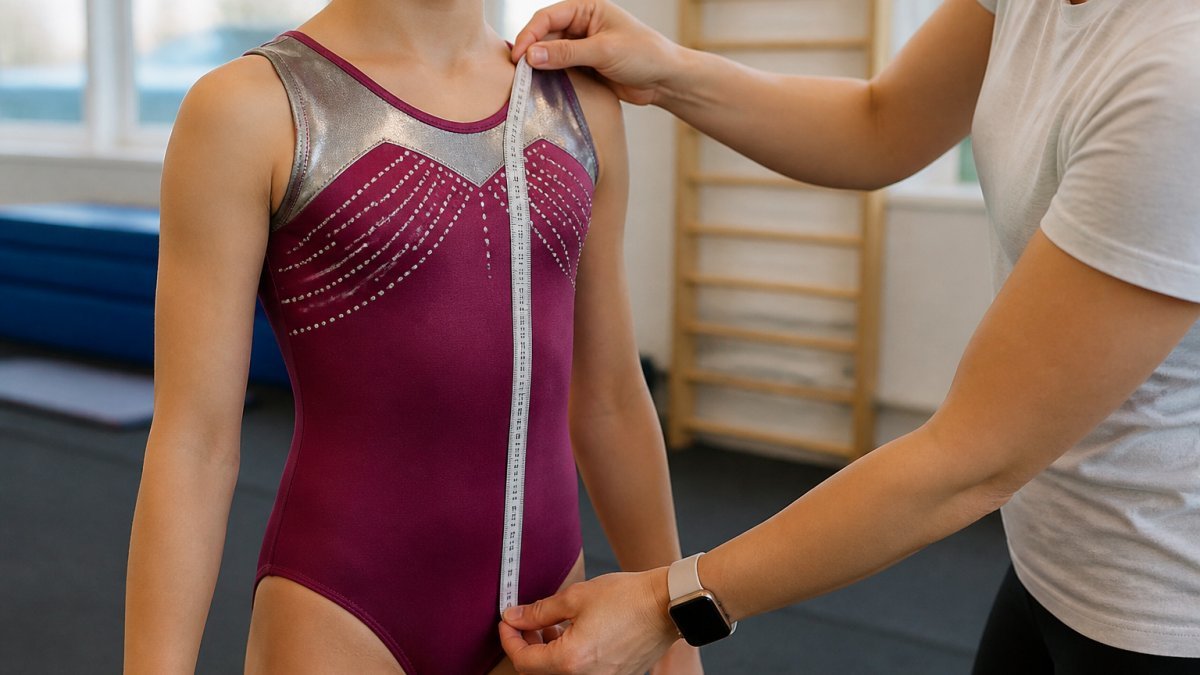
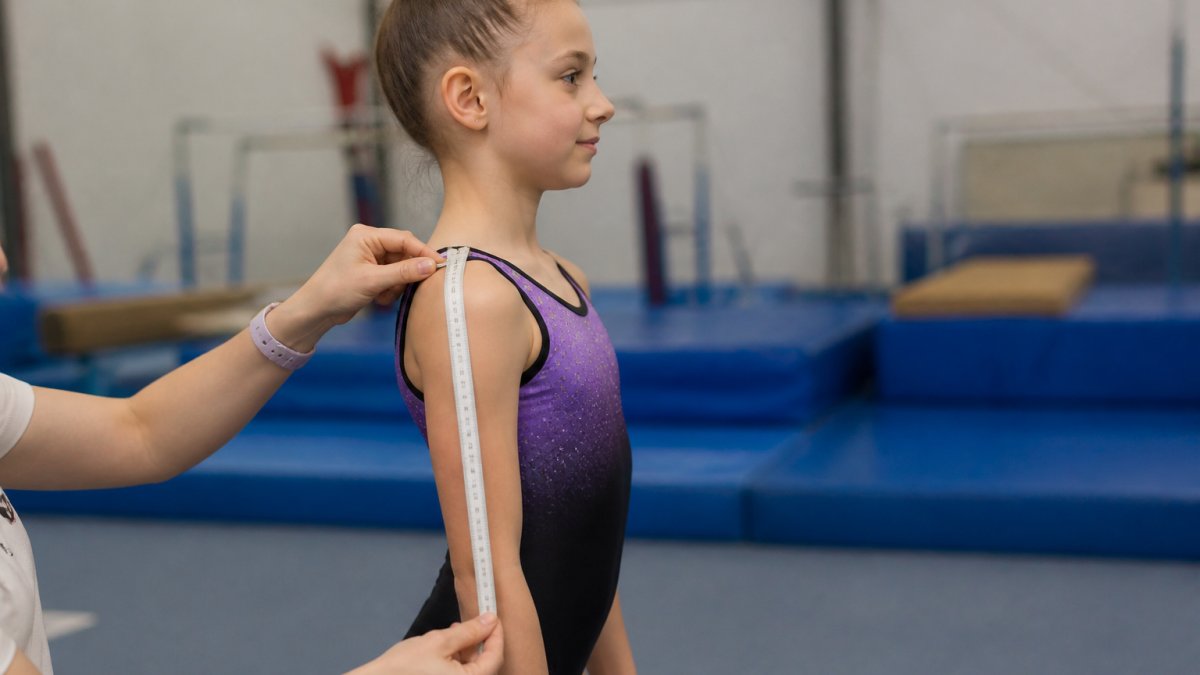
Step 1: Position Your Measuring Tape at the Center of the Shoulder
Start at the center of one shoulder. This is the midpoint between your neck and the edge of your shoulder bone. The tape should sit where the shoulder seam would fall on a fitted shirt.
Mark this spot lightly with your finger if it helps. This is your starting point for the girth measurement, which is the key to getting a leotard that fits properly.
Step 2: Run the Tape Down the Front of the Body
From the center of the shoulder, run the tape straight down the front of your body. Keep the tape against your skin without pulling it tight. The tape should follow the center line of your chest.
Let the tape rest naturally. Don't stretch it or pull it snug. This is where many people make mistakes, they cinch the tape thinking it needs to be tight, which gives an inaccurate measurement.
The tape should pass through the center of your chest and down past your waist. Keep it centered as it travels down.
Step 3: Pass the Tape Through the Crotch
This step determines whether your leotard will fit without gaps or bunching. Bring the tape down and pass it through the crotch area. The tape should go straight through without angling to one side.
Some people feel awkward with this measurement, but it's the most important part of getting an accurate girth measurement. The distance from shoulder to crotch is what prevents a leotard from riding up during backflips or splits.
Make sure the tape stays centered. If you're measuring someone else, have them stand naturally and help guide the tape to ensure it's straight.
Step 4: Bring the Tape Up the Back to the Same Shoulder Point
Continue the tape from the crotch up the back of the body. Run it straight up the center of the back, following the spine. Bring it up to the same shoulder point where you started.
The tape should end at the center of the same shoulder. This completes your girth measurement, the most critical dimension for leotard fit.
Write down this number. This is your torso measurement, and it's what determines whether a leotard will fit your body proportions.
Taking Additional Measurements: Chest, Waist, and Hips
Beyond your torso girth, most leotard size charts ask for three more measurements. These help confirm your size and ensure the leotard fits across your whole body.
Chest or bust circumference: Measure around the fullest part of your chest. Keep the tape parallel to the ground and snug but not tight.
Waist circumference: Measure around your natural waist, the narrowest part of your torso. Again, keep the tape snug without pulling.
Hip circumference: Measure around the fullest part of your hips. This measurement matters most for leotards that have a fitted hip area or for gymnasts with a significant difference between waist and hip width.
Write all four measurements down:
- Torso (girth)
- Chest
- Waist
- Hips
You'll also need your height. Measure from the top of your head to your feet in your normal standing posture. Some leotard brands use height to adjust the length of the torso section.
Using a Gymnastics Leotard Size Chart to Find Your Size
Every leotard brand uses a different size chart. We recommend checking the chart for the specific leotard you want before ordering.
Here's how to use a size chart:
- Find your torso measurement in the chart's girth column. This is your primary size indicator.
- Cross-check with your height. Most charts list height ranges for each size. Your height should fall within that range.
- Confirm with chest, waist, and hip measurements. These should fall within the ranges listed for your size.
- If measurements span multiple sizes, use your torso as the tiebreaker. The girth measurement is the most important for proper fit.
Different brands size differently. A size 6 at one company might be a size 8 at another. Always check the specific size chart for the leotard you're buying.
If you're shopping for leotards, size charts often account for different body proportions. Some gymnasts have longer legs and shorter torsos, while others have the opposite. Charts help you find the right size for your unique body.
Start Custom Design Process Here →
What to Do If Your Measurements Fall Between Sizes
It's common for measurements to fall between two sizes. Your torso might be a 6, but your chest is closer to an 8. This is where it gets tricky.
Start with your torso measurement. This is the least forgiving dimension. A leotard that's too short in the torso will be uncomfortable and restrict movement.
If your torso is firmly in one size but other measurements suggest a different size, choose the size based on your torso.
Consider your body proportions. If you have a longer torso and shorter legs, size up slightly. If you have a shorter torso and longer legs, size down.
Check the brand's guidelines. Some companies recommend sizing up if you're between sizes. Others suggest sizing down.
When in doubt, reach out to the leotard company's customer service. They can help you choose the best size based on your specific measurements.
How Should a Gymnastics Leotard Fit Once You Have the Right Size
Once your leotard arrives, check the fit carefully. A properly fitting leotard should feel snug but not restrictive. Here's what to look for:
Shoulder fit: The seams should sit at the edge of your shoulders, not riding up onto your neck or slipping down your arms. There should be no gaps between the leotard and your shoulder.
Torso length: The crotch seam should sit right at the crotch without pulling up or sagging down.
Chest and waist: The leotard should be snug across your chest and waist without creating rolls or bunching.
Movement: Do a few simple movements, a cartwheel, a jump, a split if you can. The leotard shouldn't shift, ride up, or create uncomfortable pressure anywhere.
No gaps: Check for gaps at the armholes, neckline, or leg openings. Small gaps are normal, but large gaps mean the size isn't right.
A well-fitting leotard stays in place during intense activity. It doesn't dig in, bunch, or shift. If your leotard does any of these things, the size isn't right for your body.
Foxy's leotards are designed with our signature zig-zag stitch for durability and a comfortable fit that moves with your body.
Common Mistakes to Avoid When Measuring
Most measurement errors come from a few common mistakes. Avoid these to get accurate results:
Pulling the tape too tight. Your measurement should be snug but not cinched. If you pull too hard, you'll get a smaller measurement than your actual size, and the leotard will be too small.
Not keeping the tape centered. The tape should follow a straight line down the front and back of your body.
Measuring over clothing. Always measure directly against your skin or in a leotard. Thick clothing adds bulk and throws off your measurement.
Rounding your measurements. A 16.5-inch torso is different from a 17-inch torso. Don't round to the nearest whole number.
Measuring at different times of day. Your body swells slightly throughout the day. Measure in the morning for the most consistent result.
Forgetting to measure height. Height matters for leotard length. A 4'8" gymnast and a 5'2" gymnast with the same torso measurement might need different sizes.
Not double-checking your work. Measure twice. If you get the same number both times, you're confident in your measurement.
Assuming all brands size the same. They don't. Always check the size chart for the specific leotard you're buying.
Getting the right size for a gymnastics leotard comes down to measuring your torso accurately and using the correct size chart. We're here to help you find a leotard that fits your unique body and gives you the confidence to move with power and style. Start Custom Design Process Here to explore our full range of gymnastics leotards built with durable craftsmanship and vibrant designs.
Frequently Asked Questions
How do you measure torso length for a leotard?
Measure from the center of the shoulder straight down the front of the body through the crotch and up the back to the same shoulder point. Keep the soft measuring tape against the body without pulling tightly. The tape should run down the centerline of the front and back, passing directly through the crotch area. This girth measurement is the most important measurement for leotard fit, as it determines how the leotard will sit on the shoulders and whether it will bunch or gap at the crotch.
Should you measure over clothing or directly against the body?
Measure directly against the body or over thin, fitted clothing like a t-shirt. Remove heavy layers, hoodies, or loose clothing that will add bulk and give inaccurate measurements. The gymnast should stand naturally with arms at her sides in a relaxed position. Taking measurements over regular clothing can add half an inch or more to your torso measurement, which will result in a leotard that's too large.
What should you do if your torso measurement falls between leotard sizes?
If your measurement falls between sizes, consider the gymnast's body proportions and how she'll use the leotard. If you're unsure, check the brand's size chart for guidance on whether to size up or down.
What measurements besides torso length do you need to choose a leotard size?
Along with torso or girth measurement, you'll need chest or bust circumference, waist circumference, hip circumference, and height. Measure chest by wrapping the tape around the fullest part of the chest, waist at the narrowest point, and hips at the fullest part. Height helps account for different body proportions. Using all these measurements with a gymnastics leotard size chart ensures the best fit across the entire body.



Leave a comment
This site is protected by hCaptcha and the hCaptcha Privacy Policy and Terms of Service apply.